Full-coverage foundation has been the bridal standard for decades — understandably so. On a day when photographs are taken for twelve hours, the instinct is to want every imperfection managed. But that standard is shifting. More brides — and more experienced bridal artists — are moving toward skin-first makeup, and the results are better in person and on camera.
What skin-first actually means
Skin-first makeup is a philosophy before it's a formula. The basic premise: real, well-prepared skin photographs more beautifully than skin covered by product. The goal is to make your skin as good as possible, then enhance it — rather than cover it.
In practice, this means a lighter-coverage formula: a tinted moisturizer, a skin tint, a serum foundation. More attention to targeted concealer where it's actually needed. More cream products that melt into the skin. More glow. More visible texture through the makeup.
The question to ask your bridal artist isn't "can you cover X?" — it's "can you make my skin look like its best version of itself?"
Why it photographs better
Full-coverage foundation can flatten the face in photographs. The subtle variations and natural dimension of skin disappear under a heavy formula, and the face can read as a mask rather than a person. It also sits differently under different lighting conditions, sometimes revealing in flash what looked perfect in the mirror.
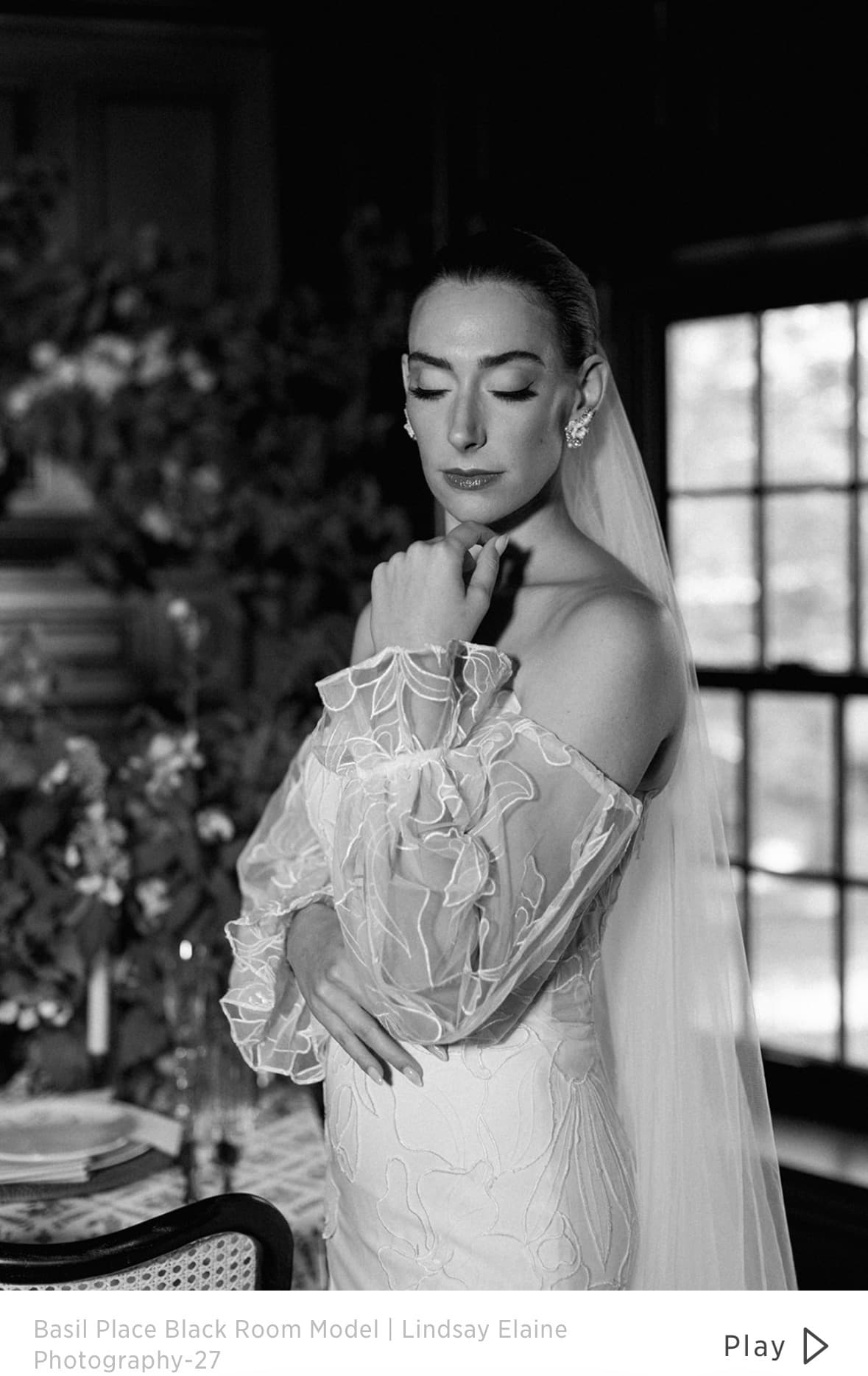
Well-prepared skin with light coverage keeps the three-dimensionality of your face intact. The glow photographs as real. Across a twelve-hour wedding day and every lighting environment it includes, it adapts rather than reveals.
What preparation looks like
Skin-first makeup requires work before the wedding, not just on the morning of. The approach depends on skin that is genuinely prepared — hydrated, smooth, and calm.
Start six months out with a consistent daily routine: cleanser, moisturizer, SPF. That's the foundation your makeup artist is working with. In the three months before the wedding, add specific treatments your skin needs. Hydrating serums if your skin runs dry. Niacinamide or gentle exfoliation if texture is a concern. Retinol — but stop four weeks before the wedding to let the skin stabilize before the trial.
What to discuss at your trial
Tell your artist you're interested in a skin-first approach and bring reference images of the finish you're after. She'll look at your skin at the trial — its current state, its texture, how it accepts product — and tell you specifically what's realistic. She can also advise on what preparation would help in the remaining time before the wedding. This is exactly the conversation the trial is designed for.
Frequently Asked Questions
What is skin-first bridal makeup?
Skin-first makeup prioritizes skin preparation over product coverage. Rather than using full-coverage foundation to create a perfect canvas, it uses skincare-forward formulas — tinted moisturizers, skin tints — over well-prepared skin. The result looks like great skin, not makeup.
Does skin-first makeup last for a 12-hour wedding day?
Yes, with the right preparation and setting technique. The misconception is that sheer coverage means poor wear. With a good primer, strategic coverage where needed, and appropriate setting, skin-first makeup holds as well as full-coverage formulas.
How far in advance should I start skincare prep for a skin-first bridal look?
Start six months before the wedding if possible. A consistent routine of cleansing, moisturizing, and SPF makes a significant difference. In the final three months, add targeted treatments for your specific concerns. The trial will reveal what your skin needs and your artist can advise from there.