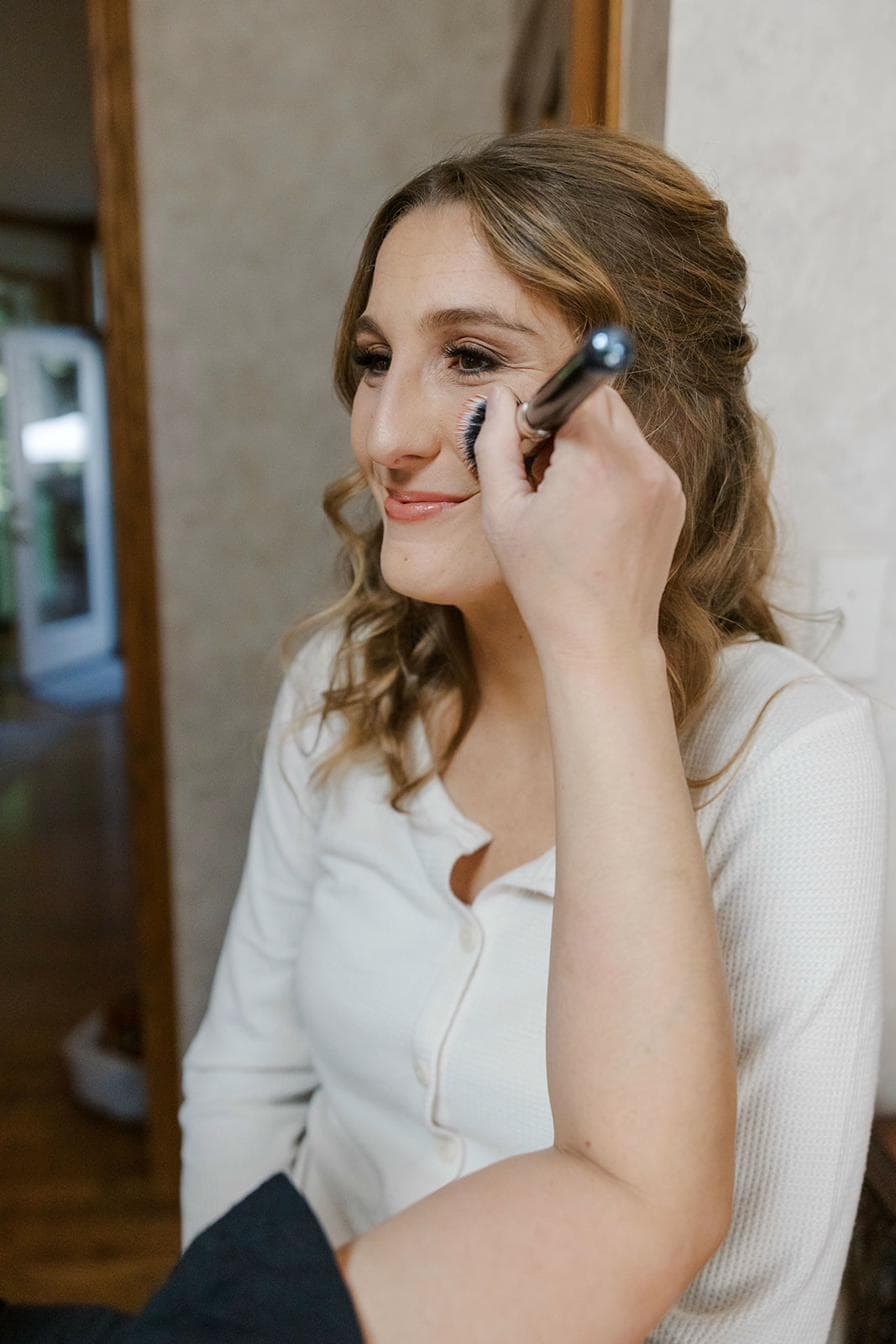
Glass skin peaked. The look was beautiful — dewy, luminous, almost translucent — but on a twelve-hour wedding day, across every kind of lighting from overcast gardens to candlelit ballrooms, something slightly warmer and more dimensional started performing better. That's glazed skin. And it's everywhere in 2026.
What glazed skin actually is
Glazed skin is a luminous complexion finish that reads as naturally radiant rather than visibly polished. It's warm where glass skin was cool. Dimensional where glass skin was reflective. The reference point isn't a wet look or a filtered effect — it's the glow your skin has after a full night of sleep and a genuinely good morning.
In practice, it's built with cream products layered over a well-prepared base. The glow comes from inside the makeup, not on top of it. Cream blush worked into the skin, a soft cream highlight on the high planes of the face, a skin tint or light-coverage foundation. The skin shows through.
The test: does the glow look like it belongs to the person, or like something applied to them? Glazed skin passes that test.
Why it photographs well for weddings
Full-coverage matte foundation can look flat in photography — the texture of real skin disappears, and the face can read as a mask. Glazed skin keeps the texture and dimension that makes a photograph look alive.
It also performs across lighting conditions. The warm luminosity reads as healthy in morning window light, in flash photography, in golden hour, and in candlelight. Glass skin, by contrast, can look overly shiny in some lighting environments — particularly flash.
How it's built
Prep is everything. Glazed skin requires hydrated, smoothed skin underneath. That means a consistent skincare routine in the weeks leading up to the wedding — nothing dramatic, just daily moisturizing and SPF.
At the appointment, we start with a luminosity primer. Then a skin tint or light-coverage foundation, patted in with a damp sponge rather than buffed. Cream blush applied with fingers — the warmth of your hand helps blend it into the skin rather than onto it. A cream or liquid highlighter on the tops of the cheekbones, the bridge of the nose, the cupid's bow. Set the nose, undereye, and forehead lightly. Leave the rest luminous.
Over-powdering is the most common way glazed skin becomes flat. The discipline is in knowing what not to set.
Is it right for you?
Almost universally, yes — with technique adjusted for your skin. Oilier skin types can absolutely wear glazed skin with the right primer and strategic setting. Drier skin types wear it naturally. If you're uncertain, bring it to the trial. That's exactly what the trial is for.
Frequently Asked Questions
What is glazed skin makeup?
Glazed skin is a warm, luminous complexion that looks naturally radiant — more lived-in than glass skin, less flat than matte. It's built with cream-based products layered over a flawless base to create dimensional glow that photographs as healthy, not shiny.
Is glazed skin appropriate for bridal makeup?
Yes — it's one of the most photographable bridal finishes right now. The key is skin preparation underneath. Well-hydrated, primed skin makes the glow look like you rather than like product. An experienced bridal artist will set the right zones to ensure it holds all day.
How is glazed skin different from glass skin?
Glass skin emphasizes reflective shine and a nearly translucent quality. Glazed skin is warmer and more dimensional — the difference between a mirror and a lit candle. Glazed skin tends to photograph more naturally on most skin tones.